National Lampoon may refer to: National Lampoon (magazine), the original humor magazine from 1970 to 1998, and those spinoffs that directly related to the magazine: National Lampoon Lemmings, a 1973 stage show The National Lampoon Radio Hour, produced from 1973 to 1974
National Lampoon. National Lampoon was a ground-breaking American humor magazine. Its success led to a wide range of media productions associated with the magazine’s brand name. The magazine ran from 1970 to 1998, and started out as a spinoff from the Harvard Lampoon.
Definition of lampoon. (Entry 1 of 2) : satire sense 1 specifically : a harsh satire usually directed against an individual He said such ridiculous things that he was often the target of lampoons in the press. lampoon. verb. lampooned; lampooning; lampoons. Definition of lampoon (Entry 2 of 2) transitive verb.
Numerous movies were subsequently made that had “National Lampoon” as part of the title. Many of these were unrelated projects because, by that time, the name “National Lampoon” could simply be licensed on a one-time basis, by any company, for a fee.
What is the National Lampoon based on?
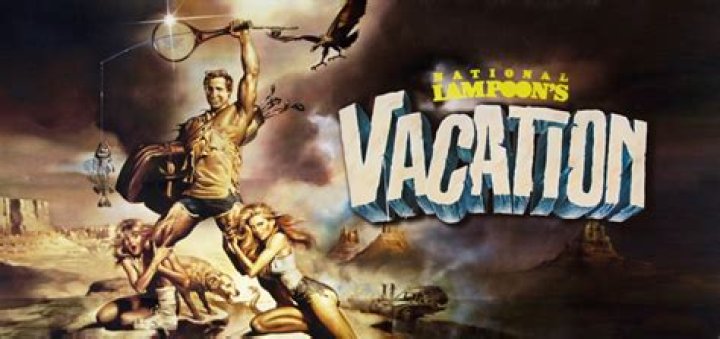
National Lampoon. National Lampoon’s Animal House, a 1978 film, also based upon stories from the magazine. National Lampoon’s Vacation (film series), a series of comedy films based upon stories written for National Lampoon magazine.
The National Lampoon Radio Hour, produced from 1973 to 1974. National Lampoon’s Animal House, a 1978 film, also based upon stories from the magazine. National Lampoon’s Movie Madness, a 1981 film. National Lampoon’s Class Reunion, a 1983 film.
What was the National Lampoon?
National Lampoon was an American humor magazine that ran from 1970 to 1998. The magazine started out as a spinoff from the Harvard Lampoon. National Lampoon magazine reached its height of popularity and critical acclaim during the 1970s, when it had a far-reaching effect on American humor and comedy. The magazine spawned films, radio, live theatre, various sound recordings, and print products including books. Many members of the creative staff from the magazine subsequently went on to contribute creatively to successful media of all types.
“True Facts” was a section near the front of the magazine which contained true but ridiculous items from real life. Together with the masthead, it was one of the few parts of the magazine that was factual. “True Facts” included photographs of unintentionally funny signage, extracts from ludicrous newspaper reports, strange headlines, and so on. For many years John Bendel was in charge of the “True Facts” section of the magazine. Steven Brykman edited the “True Facts” section of the National Lampoon website. Several “True Facts” compilation books were published in the 1980s and early 90s, and several all-True-Facts issues of the magazine were published during the 1980s.
National Lampoon Sunday Newspaper Parody, 1978 (claiming to be a Sunday issue of the Dacron, Ohio (a spoof on Akron, Ohio) Republican–Democrat, this publication was originally issued in loose newsprint sections, mimicking a genuine American Sunday newspaper.) Art Direction and Design by Skip Johnston.
The Harvard Lampoon was established in 1876 as a long-standing tradition of the campus, influencing the later National Lampoon Brand in its evolution from illustration-heavy publications to satirical wit, ranging from short fiction to comic strips. The magazine’s first issue was dated April 1970.
The magazine declined during the late 1980s, and ceased publication in 1998. Projects under the “National Lampoon” brand name continue to this day, under its production company successor, National Lampoon Inc.
ADVERTISEMENT
He fired the entire editorial staff, and appointed his two sons, Michael Simmons and Andy Simmons, as editors, Peter Kleinman as creative director and editor, and Larry “Ratso” Sloman as executive editor. The magazine was on an increasingly shaky financial footing, and beginning in November 1986, the magazine was published six times a year instead of every month.
At the same time, the National Lampoon Show’s John Belushi and Gilda Radner left the troupe to join the original septet of SNL’s Not Ready for Primetime Players. The magazine was a springboard to the cinema of the United States for a generation of comedy writers, directors, and performers.
