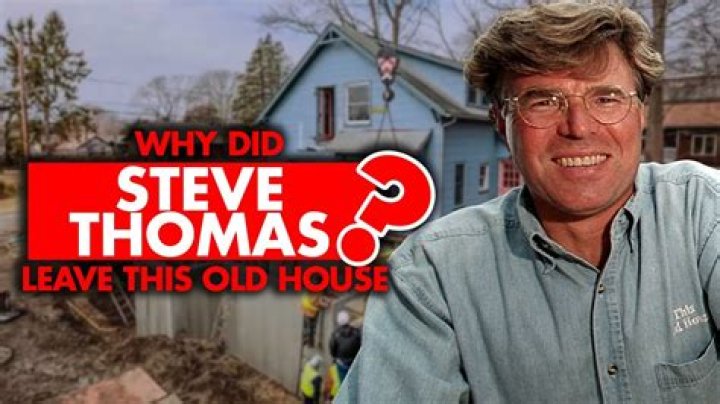
Steve Thomas (television) Stephen Thomas (born 1952; known as Steve Thomas) is an American author and television personality. He was the host of the PBS home renovation series This Old House from 1989 to 2003 and of Renovation Nation, on Discovery’s former Planet Green channel, for two seasons (2008–2010) until its cancellation.
Stephen Thomas (born 1952; known as Steve Thomas) is an American author and television personality. He was the host of the PBS home renovation series This Old House from 1989 to 2003 and of Renovation Nation, on Discovery’s former Planet Green channel, for two seasons (2008–2010) until its cancellation.
It’s simply that, after 14 years on “This Old House,” Thomas wanted to move on to other things, reportedly including some new projects on the DIY Network. He left under very amicable terms and will continue to be seen in repeats of older episodes of “This Old House.”
Stephen Thomas (born 1952) is an American author, builder and television personality. He was the host of the PBS home renovation series This Old House from 1989 to 2003 and of Renovation Nation, on Discovery’s former Planet Green channel, for two seasons (2008–2010) until its cancellation.
Why didn’t Hamilton get the part?
Some reports say he didn’t get the part because he was blond, others because Hamilton did not make a big secret of the fact he was gay. He co-starred in the 1988-90 TV revival of “Mission: Impossible,” and his last feature film role was in the 1991 thriller “Fatal Instinct.”.
The former bank executive landed his “House” gig through sheer serendipity, after he and his wife, Kathle en, e-mailed “Ask This Old House” for tips on renovating their first home, a Queen Anne Victorian.
Why did public broadcasting turn to underwriting?
So often, public broadcasting would turn to underwriting, allowing corporations to pick up the bills in a way that wasn’t directly advertising but served much the same purpose .
In the 1997 book Made Possible By …: The Death of Public Broadcasting in the United States, author James Ledbetter makes a compelling case that this kind of underwriting threatened the very mission of the public television, because of the way that financial pressures could directly or indirectly influence what gets on the air.
Due to its status as a show on public television, the show’s on-air personalities initially went out of their way not to mention brands during the show. In one example cited by Morash in a Boston Magazine oral history from 2009, the show’s producers would actively hide the Owens Corning branding on rolls of fiberglass (even though Owens Corning was an underwriter for the show!), which led the manufacturer to change the way the rolls were branded so hiding the detail was unavoidable.
To be clear, I’m not trying to begrudge Bob Vila his success at all. He got into the home-repair business as an entrepreneur, not a phi lanthropist, and it just turned out that his entrance into a public profile came about in a medium, public television, that was rife with ethical conflicts, most of which he wasn’t responsible for and wouldn’t have faced if he was on another channel.
Vila never hid what he was doing, and disclosed and gave approval rights to each commercial opportunity to the bosses at WGBH, but even with that in mind, his aggressive salesman approach ultimately ran head-first into the realities of the public television funding situation.
The TV handyman hasn’t had a regular show on the air in a few years, but repeats spring eternal and his profile remains sizable—so much so that he’s had to deal with multiple lawsuits in recent years related to people trying to capitalize on his likeness rights.
Trethewey and Abram are still with the show after all these years— and the show is still chugging along, like the homes that gained a second life from This Old House ’s TLC. But Vila? Well, let’s just say things got messy.
ADVERTISEMENT
